

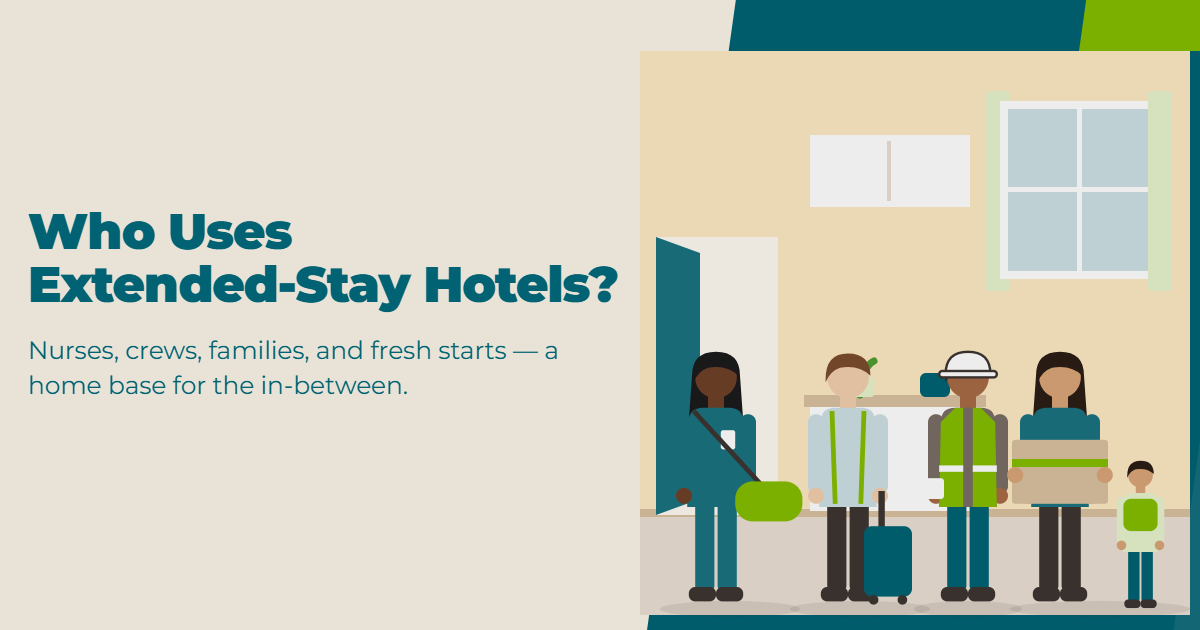
Who uses extended-stay hotels? Mostly working people in the middle of something – a contract, a project, a move, a new job, or a change in housing.
That can mean a travel nurse working a 13-week assignment, a construction crew spending months on a project, a family waiting for a new home, or someone starting a job in a city they’ve never lived in before.
The situations are different. The reason for choosing an extended-stay hotel is often the same: you need a place to live for weeks or months without signing a lease.

Travel Nurses and Medical Professionals
A 13-week assignment can put a travel nurse in a new city with a very specific housing challenge: you need somewhere furnished, practical, and available for the full length of the contract.
A traditional hotel may work for a few nights, but a three-month assignment requires a different setup. Having an in-room kitchen means you can prepare your own meals instead of relying on takeout every day. On-site laundry means you can pack for the assignment without bringing a suitcase full of clothes for every week.
There is also the question of flexibility. Your assignment may be extended, shortened, or followed by another position somewhere else. An extended-stay arrangement can give you a place to live without committing to a traditional lease in a city where you may only be staying temporarily.
Construction Crews and Trade Workers
Construction and trade work can take you wherever the project is.
When a job lasts for weeks or months, finding housing for one worker is only part of the challenge. A crew may need multiple rooms, convenient access to the job site, parking that works for its vehicles, and a setup that makes everyday life manageable after a long workday.
Weekly billing can also make sense when accommodations need to line up with the length of an assignment. Kitchens give workers another option besides eating out every day, while on-site laundry can make a longer stay easier to manage.
Keeping a crew in the same property can simplify the logistics of a temporary assignment, too.
People Relocating for Work
Starting a new job and finding a new home do not always happen on the same schedule.
You may arrive in a new city before you have time to find an apartment. Your previous lease may end before your new home is ready. Or you may want to learn the area before deciding where you want to live permanently.
An extended-stay hotel can fill that gap.
You can start the job, settle into the city, and look for permanent housing without trying to coordinate a lease, move-in date, furniture delivery, and utilities all at once.
That flexibility can be particularly useful when a relocation timeline changes. Instead of forcing your housing decision to match an exact date, you can focus on getting settled first and making the longer-term decision when you're ready.
Families Between Homes
Extended-stay hotels are also used by families whose housing plans did not go exactly as expected.
A home sale may close before the next house is ready. A renovation may take longer than planned. An insurance-related displacement may require temporary housing while repairs are underway.
Sometimes the transition is simply inconvenient. Other times, it comes during a genuinely difficult period.
In either case, the practical needs are similar. A family needs somewhere to stay that offers more than a place to sleep, along with enough flexibility to accommodate an uncertain timeline.
A kitchen can make regular family meals easier. A furnished room eliminates the need to move everything into a temporary rental. And week-to-week flexibility can help when the date for moving into the next home keeps shifting.
Extended-stay hotels aren't a replacement for a permanent home. They're a practical option when you need temporary housing that works like everyday living.
Remote Workers, New Graduates and Fresh Starts
Not every extended-stay guest is traveling for a traditional business assignment.
A remote worker may want to spend a month in a new city before deciding whether to move there. A recent graduate may be starting a first job without an established local housing setup. Someone may simply want time to settle into a new place before signing a lease.
For these guests, the appeal can be flexibility.
You can have a furnished place to stay while you learn a new area, establish a routine, and figure out what comes next. A kitchen can make it easier to manage everyday meals, while dependable WiFi matters when work depends on staying connected.
Age can also be part of the equation. Someone booking their first hotel stay at 18 may have different housing options than someone with years of rental history.
Budget-Smart Travelers
You don't necessarily need a relocation, work assignment, or major life transition to benefit from an extended-stay hotel.
Some travelers simply want a more practical way to spend a week or longer.
A kitchen can reduce how often you need to eat out. Laundry access can help you pack less. Weekly or monthly pricing can make a longer stay easier to budget than booking night after night.
For someone taking a longer trip, those everyday conveniences may matter more than amenities designed for a short vacation.
The question isn't whether you could stay somewhere else.
It's whether the room and rate support the way you'll actually spend your time there.
Why Extended-Stay Hotels Work for So Many Different Guests
The people staying in extended-stay hotels may have very different reasons for being there, but many are looking for the same three things.

Weekly and monthly pricing
Longer stays need pricing that makes sense over longer periods. Weekly and monthly rates can provide a more predictable way to plan housing costs than treating every night as a separate hotel reservation.
In-room kitchens
When you're staying for weeks, buying every meal from restaurants gets old—and expensive.
An in-room kitchen gives you another option. You can keep groceries on hand, make breakfast before work, prepare dinner, and maintain more of your normal routine.
No-lease flexibility
A lease can make sense when you know where you want to live and how long you'll be there.
An extended-stay hotel serves a different need. You can have a furnished place to stay while your job, project, move, or housing situation takes shape.
That flexibility is what connects many of the guests described above. They're not all traveling for the same reason. They're simply in a period when a permanent housing commitment doesn't fit the timeline.
So, Who Uses Extended-Stay Hotels?

There isn't one typical extended-stay guest.
It might be a nurse working a temporary assignment. A crew completing a project. A family between houses. A new graduate starting a first job. A remote worker trying a new city. Or a traveler who simply wants a kitchen and more flexibility during a longer trip.
The common thread is not a job title or life stage.
It's the need for a practical place to stay for longer than a few nights and less commitment than a lease.
That is exactly where extended-stay hotels fit.
If that's where you are right now, explore WoodSpring Suites locations to find a stay near your destination.
Frequently Asked Questions About Who Uses Extended-Stay Hotels
Who uses extended-stay hotels?
Extended-stay hotels serve many types of guests, including travel nurses on temporary contracts, construction and trade crews, relocating employees, families between homes, remote workers, new graduates, and travelers taking longer trips. The common need is a furnished place to stay for weeks or months without committing to a traditional lease.
Are extended-stay hotels only for business travelers?
No. Business travelers are one part of the extended-stay audience, but these hotels also serve relocating families, medical professionals on temporary assignments, new graduates, and people in housing transitions. The category is designed for anyone who needs more than a few nights and less commitment than a traditional lease.
Do people live in extended-stay hotels?
People can use extended-stay hotels as medium-term housing for stays lasting from several weeks to months. These accommodations are designed to support longer visits with features such as kitchens, laundry access, and other practical amenities. The exact terms, rates, and maximum stay periods vary by property.
Why do construction workers stay at extended-stay hotels?
Construction workers may need housing near a job site for the length of a project. Extended-stay hotels can offer weekly pricing, kitchens, laundry access, and multiple rooms for a crew, making them practical for temporary assignments that last longer than a typical hotel stay.
Where do travel nurses usually stay?
Travel nurses often consider extended-stay hotels because temporary assignments can last several weeks or months. A furnished room with a kitchen and practical amenities can provide a more flexible setup than arranging a traditional lease in an unfamiliar city.
Are extended-stay hotels good for families?
They can be a practical option for families during a move, renovation, insurance-related displacement, or another temporary housing transition. Kitchens can make family meals easier, while flexible stay options can work when the timeline is uncertain. Room capacity and property policies vary, so confirm the accommodation fits your household before booking.