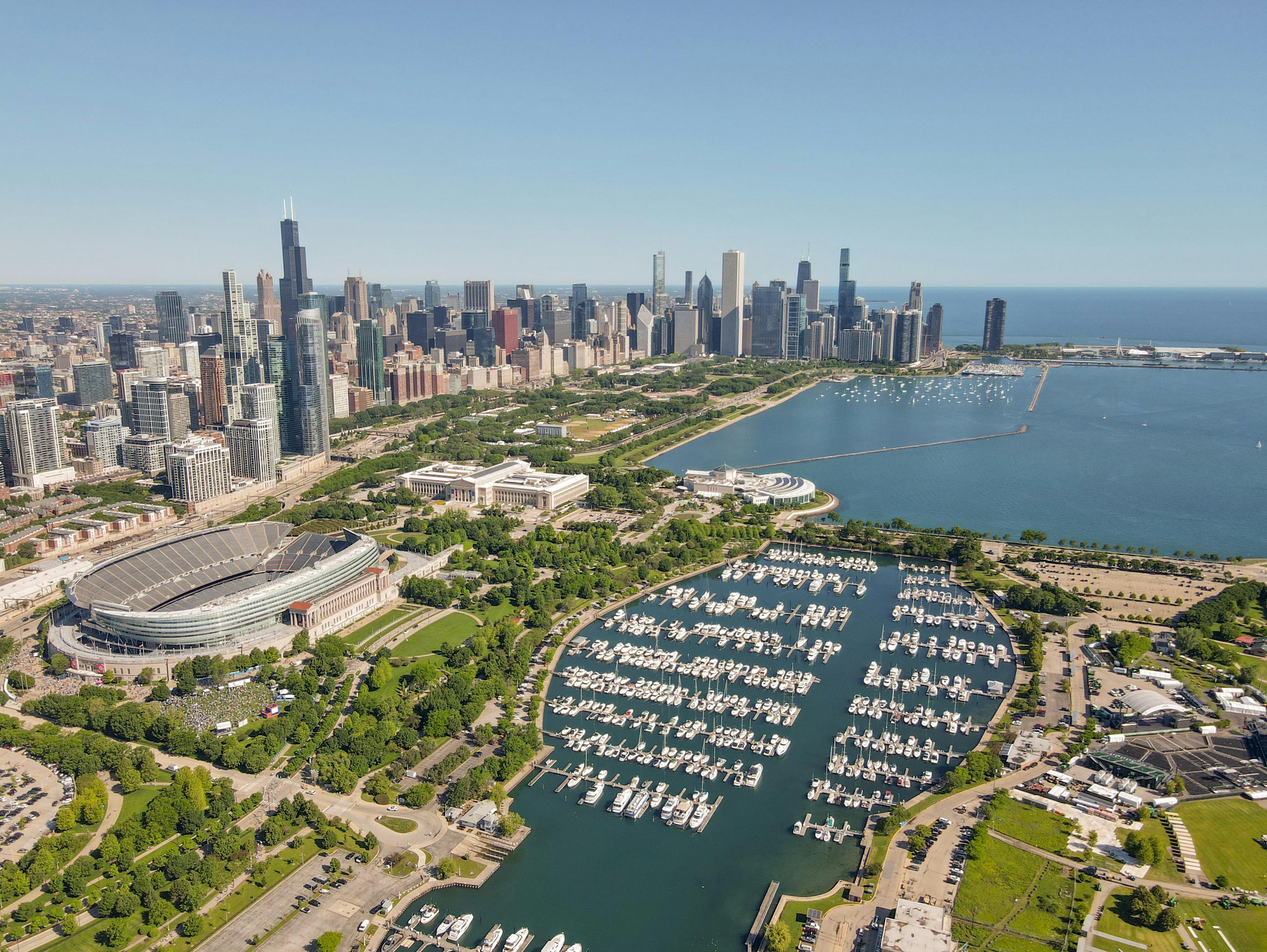
Chicago is one of the most dynamic cities in the United States. Known for its dramatic skyline and strong neighborhood culture, the Windy City attracts people from across the country looking to experience big-city living in the Midwest. If you’re considering a move for work, a short-term assignment, or a new opportunity, you may be wondering what life in Chicago is actually like.
Quick Facts About Chicago
The city is home to roughly 2.7 million people, making it the third largest in the country, but it rarely feels like a single, uniform whole. Instead, Chicago functions as a collection of smaller places stitched together by transit lines, lakefront parks, and long-standing neighborhood loyalties.
|
|
|
|
Location |
Northeastern Illinois along the southwestern shore of Lake Michigan. |
|
Population |
About 2.7 million residents (roughly 9.6 million people in the Chicago metropolitan area). |
|
Recreation |
26 miles of open beaches and parks along the Lake Michigan shoreline, including 18 miles of biking and running paths across the Lakefront Trail. The city maintains over 600 public parks. |
|
Neighborhoods |
More than 200 distinct neighborhoods, each with its own character. Beyond the city, the Chicago suburbs offer space and convenience, expanding across several neighboring counties connected by bus, rail, and road. |
|
Transportation |
The Chicago “L” train system and bus network connect many parts of the city. The city is served by two major airports: O’Hare International Airport and Midway International Airport, which together handle more than 100 million passengers each year. |
|
Architecture |
Chicago is widely considered the birthplace of the modern skyscraper, boasting more than 1,300 buildings taller than 300 feet—including the landmark Willis Tower at a height of 1,450 feet. |
|
Major industries |
Finance, healthcare, logistics, consulting, technology, and manufacturing, supporting one of the most diversified economies in the United States. |
|
Famous foods |
Deep-dish pizza, Chicago-style hot dogs, Italian beef sandwiches. |
|
Sports teams |
Cubs and White Sox (MLB), Bears (NFL), Bulls (NBA), Blackhawks (NHL), Sky (WNBA), Fire FC (MLS). |
Living in Chicago: Key Things to Know
With more than 200 neighborhoods spread across 228 square miles, Chicago gives you a wide range of ways to live. Residents often identify as strongly with their neighborhood as they do with the city itself. Once you start paying attention, that local identity is hard to miss.
Lincoln Park, for example, is known for its lakefront parks, tree-lined residential streets, and proximity to downtown. It feels polished and established, with a mix of young professionals, families, and longtime residents. Lakeview, home to Wrigley Field, combines sports culture, nightlife, and commerce with residential side streets that still feel distinctly local.
Further west, Wicker Park and Logan Square boast creative energy, independent shops, restaurants, cocktail bars, and farmers markets. To the south, Hyde Park offers a quieter, more academic atmosphere shaped by the University of Chicago, with historic architecture and lakefront access. Meanwhile, the West Loop has transformed from a warehouse district into one of the city’s most visible examples of urban reinvention.
That neighborhood variation matters. In Chicago, where you live shapes your daily routine, commute, and social life. If you’re still narrowing down where to settle, staying somewhere flexible in the Chicago area can give you time to explore different parts of the city before making a longer-term decision.
Why People Move to Chicago
Chicago attracts newcomers for many reasons, and one of the biggest is opportunity. The city’s economy is among the most diverse in the country, and the broader metropolitan area is one of the largest economic engines in the United States, generating roughly $900 billion in annual economic output.
The Windy City also offers a cultural experience that feels unusually deep. Institutions like the Art Institute of Chicago, the Museum of Science and Industry, and the Chicago Symphony Orchestra form part of the city’s long-standing civic identity. Plus, Chicago remains one of the country’s great theater and comedy towns, with venues like Second City playing an outsized role in American entertainment history.
Food culture is another reason people move here. Chicago’s reputation may begin with deep-dish pizza, but it doesn’t end there. The city’s dining scene stretches across neighborhoods and cuisines, from old-school diners and family-run spots to Michelin-starred restaurants and experimental concepts. If you enjoy eating out and trying new dishes, Chicago puts a lot on your plate.
Sports culture runs deep too. Games at Wrigley Field, the United Center, and Soldier Field are part of the city’s DNA. On game days, you can feel the sporting energy shifting block by block.
Chicago Activities and Things to Do
You’ll find a wide range of attractions and activities across Chicago, from well-known landmarks to neighborhood events. Millennium Park, home to Cloud Gate, hosts concerts, public art, and seasonal events in the heart of downtown near the lakefront. Nearby, the Chicago Riverwalk offers waterfront dining, walking paths, and a close-up view of the city’s impressive skyline along the river corridor.
Shopping in Chicago
The Magnificent Mile is one of Chicago’s most famous shopping areas, with luxury retailers, restaurants, hotels, and architecture that reflects the city’s commercial scale. For many visitors, it is the best-known retail district in the city.
But shopping in Chicago is not limited to one corridor. Across different neighborhoods, you will find boutique stores, independent retailers, bookstores, design shops, and smaller local markets. If you’re looking for outlet shopping, the Fashion Outlets of Chicago in nearby Rosemont offers a large selection of brand-name retailers.
Grocery Stores in Chicago
You’ll find a broad mix of grocery options across Chicago. Major chains in the Chicago area include Jewel-Osco, Mariano’s, Aldi, Whole Foods, and Trader Joe’s.
Farmers markets such as Green City Market and Logan Square Farmers Market are also popular during warmer months and reinforce the city’s strong connection between neighborhood life and food culture.
Chicago Nightlife
Chicago nightlife also varies widely by neighborhood. River North is known for its cocktail lounges, clubs, and a more polished downtown nightlife scene. Wrigleyville becomes especially lively during Cubs games and on weekends, with sports bars and crowds that spill into the surrounding streets. West Loop blends destination restaurants with upscale bars, while Logan Square has become known for craft cocktails, live music venues, and a more independent feel.
Even the surrounding suburbs feature quaint downtown districts, expanding culinary and entertainment options beyond the city limits, all within a short train ride.
Cost of Living in Chicago
The cost of living in Chicago is one of the first factors many people consider when planning a move, and it benefits from a more nuanced view.
Compared with cities such as New York, San Francisco, or Los Angeles, Chicago is often seen as more affordable. This relative affordability is part of its appeal, especially for people seeking big-city amenities without the higher coastal price tags.
That said, affordability in Chicago is not uniform. Your actual costs will depend largely on where you live and how you choose to live day to day. Housing is typically the biggest expense, and prices can vary significantly between neighborhoods, particularly between areas near downtown or the lakefront and those farther out.
For many newcomers, temporary housing can be a practical way to manage costs while getting established in the city. Some well-connected suburban options can help keep the cost of weekly and monthly rates in check.
Do You Need a Car in Chicago?
Transportation choices shape everyday life in Chicago more than you might expect. If you live near an “L” line, getting around can be relatively easy without a car, with many residents relying on the CTA train and bus network.
At the same time, Chicago is large, and transit coverage is uneven. In neighborhoods farther from rail lines, or if you commute outside the city, a car can offer more flexibility. Parking also affects daily life, with on-street availability, residential permits, and restrictions varying by area.
Moving to the Chicago Suburbs vs. The City
Deciding between living in Chicago or the surrounding suburbs often comes down to lifestyle and daily commute. The city is typically public transit–friendly, while many suburban residents rely on driving locally and take Metra trains or buses into Chicago for work and leisure.
Chicagoland extends well beyond the city limits into Cook, DuPage, Lake, and Will counties in Illinois, as well as parts of northwest Indiana and southern Wisconsin. From locales like Addison and Burbank to Tinley Park and Libertyville, each suburb offers its own character and attractions, along with convenient access to everything Chicago proper provides.
For relocations or extended stay hotel bookings, these nearby communities can offer both convenience and a quieter environment.
Pros and Cons of Living in Chicago
Like any major city, Chicago comes with both advantages and tradeoffs. If you’re considering a move — whether for a new job, a temporary assignment, or a new opportunity — there are practical considerations to weigh as you settle in.
Benefits of Life in Chicago
- World-class food: Chicago is widely regarded as one of the best food cities in the U.S., with everything from neighborhood diners and local favorites to globally recognized restaurants.
- Lakefront access: The extensive shoreline along Lake Michigan with its beaches, parks, and trails offers valuable access to outdoor space within a major city.
- Neighborhood diversity: With more than 200 neighborhoods, Chicago hosts a wide range of living environments, from quieter residential areas to lively, nightlife-driven districts.
- Public transportation: CTA trains and buses connect much of the city, making it possible in many neighborhoods to get around without relying on a car.
- Cultural life: Museums, festivals, theater, music, and sports contribute to a city that feels active year-round, giving you plenty of ways to spend your free time.
Living in Chicago: The Cons
- Winter weather: Chicago winters can be long, cold, and windy, particularly near the lakefront. Expect a period of adjustment if you’re not used to colder climes.
- Traffic and parking: Driving around Chicago can be challenging, especially in dense neighborhoods and downtown areas. This may influence where you choose to live.
- Cost variability: Housing and living costs vary widely based on neighborhood and lifestyle. As with any city, the impact on your pocketbook will depend heavily on where you base yourself.
- Urban density: Crowds, noise, and a faster pace of life are part of everyday city living, particularly in more central areas.
Safety is also a consideration. Like most large cities, conditions vary by neighborhood, and it is best to evaluate specific areas rather than rely on citywide perceptions. If you’re new to Chicago, taking time to research, visit neighborhoods, and speak with residents can give you a more grounded picture of what life in a particular area is really like.
Benefits of an Extended Stay Hotel
Relocating to a new city rarely happens in one go. Sometimes you arrive before your apartment lease is ready. In other cases, you may want time to explore neighborhoods in person before deciding where to live. In a city as varied as Chicago, keeping your options open can be a smart move.
Extended stay hotels are one option to consider while settling into the Chicago area. Furnished rooms, kitchen facilities, and flexible weekly or monthly stays can be especially useful if you’re relocating for work or moving between homes.
In practical terms, having a comfortable base while you get your bearings can make the process feel less compressed. In a city like Chicago, where neighborhood choice matters so much, that extra time can prove valuable.
Life in Chicago: What to Expect
If you’re considering a move, life in Chicago offers a mix of opportunity and energy that appeals to many newcomers. The city is large enough to provide the energy, institutions, and diversity people seek from a major city, but structured enough around neighborhoods that daily life still feels personal.
For those who value food, architecture, sports, public culture, and urban living, Chicagoland has a lot to offer. At the same time, winter weather, traffic, parking, and the realities of urban life are all part of the equation. For many long-time residents and newer arrivals, that tradeoff feels worthwhile.