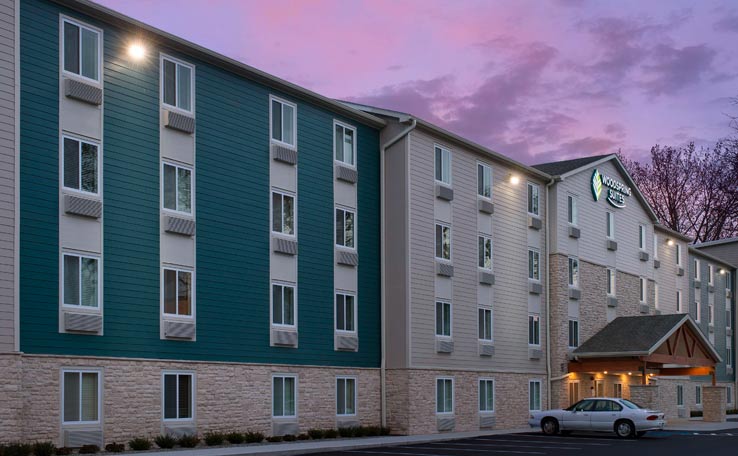
Hotel, motel, inn, extended stay. Four words that get used almost interchangeably on booking sites, and four categories that were built to do four different jobs.
The difference between a hotel and a motel isn't quality, and neither one is a step above or below an inn. Each category was designed around a different kind of stay. Book the wrong one and you either pay for services you never use or spend three weeks in a room that was never meant to hold your groceries.
Here is what each one actually is, what it generally costs, and how to choose based on the length of your stay rather than the word on the sign.
The Four Categories at a Glance
The fastest way to tell these categories apart is to stop comparing nightly rates and start comparing what each one was built to hold. Layout, included features, and typical length of stay separate them far more reliably than price does.
| Category | What It Is | Typical Layout | Built for Stays Of |
|---|---|---|---|
| Hotel | Full-service lodging, widest price range | Interior corridors, lobby, often on-site dining | 1 night to a week |
| Motel | Budget roadside lodging (“motor hotel”) | Exterior doors opening onto the parking lot | 1–2 nights on the road |
| Inn | Small, often historic and independently owned | House-style, breakfast common | Short leisure stays |
| Extended-stay hotel | Hotel built for living: kitchen, laundry, weekly rates | Interior corridors, suite-style rooms | Weeks to months |
The categories overlap at the edges, and individual properties vary. Use the table as a starting point, then confirm the details of the specific property you are considering.
What Is a Hotel?
A hotel is a lodging property with guest rooms reached from interior corridors, a staffed front desk and lobby, and some level of on-site service. It is by far the broadest of the four categories, covering everything from a budget property off the interstate to a luxury tower downtown.
Because the category is so wide, so is the price range. Two properties can both be hotels and sit hundreds of dollars apart on the same night, and location often moves the rate as much as the property itself does.
What stays fairly consistent is the structure: nightly pricing, housekeeping on most days, and a room designed for a stay of one night to about a week. Bags in, bags out.
Amenities scale with tier. A lobby and a front desk at the low end; restaurants, meeting space, a fitness center, and a pool as you move up.
You will also see hotels described as full-service or limited-service. A full-service property runs a restaurant, event or meeting space, and a larger staff. A limited-service hotel skips most of that and sells the room, a breakfast bar, and a front desk. Both are hotels. The label just tells you how much infrastructure sits behind the room.
What Is a Motel?
Motel is short for “motor hotel,” and the name is most of the definition. Motels were built for people traveling by car, typically along highways and main roads, and the layout still reflects that. Rooms open directly onto the parking lot, so you park at your door and carry your bag a few steps.
That layout is also the fastest way to tell the two categories apart. Interior corridors mean hotel. Doors facing the lot mean motel.
The trade-off is worth knowing before you book. Exterior entry makes loading and unloading easy, which matters if you are arriving late or leaving before sunrise. It also puts your door closer to outside noise and passing foot traffic than an interior hallway would.
Most motels are limited-service by design: a room, a bed, a bathroom, and sometimes a mini fridge and microwave. Fewer staff, fewer common areas, lower rate.
Sizes tend to be modest, too. One or two floors, often laid out in an L or a U around the lot, with the office at one end.
How Much Does a Motel Cost?
Motel rates generally run below comparable hotels in the same market, which is the category’s main selling point.
But location moves motel pricing more than the category does. A motel in an expensive city can cost what a mid-tier hotel charges two exits down the highway, and a well-placed property near a beach or a busy event can price like anything else nearby.
Treat “motel” as a description of layout and service level, not a guarantee about the rate.
What Is an Inn?
An inn is a small lodging property, often independently owned and frequently housed in a historic building, that trades big-hotel amenities for personal service and character. Breakfast is commonly included.
Inns tend to have a handful of rooms rather than a hundred, a house-style layout instead of long corridors, and an owner or small staff who may check you in personally. What you give up is scale. There is often no fitness center, no room service, and sometimes no elevator.
You will see the term overlap with bed and breakfast, and the two are frequently used interchangeably. Either way, you book an inn much like any hotel.
Inns suit short leisure stays: a weekend in a scenic town, an anniversary trip, a stop somewhere you actually want to sit still for a few days.
What Is the Difference Between an Inn and a Hotel?
Both are lodging you book by the night, so the real differences come down to scale and service.
A hotel is a business built on volume: a front desk covered around the clock, standardized rooms, and a service menu that expands with the price tier. An inn is built on a small number of rooms, which usually means rooms that are not identical to one another and a staff you will recognize by the second morning.
That shows up in a few practical ways. Inns are more likely to have a check-in window than an overnight desk, so a late arrival needs a phone call ahead. Room size and layout can vary within the same property, which makes the individual room description worth reading rather than assuming. And cancellation terms at a small property are often firmer, because one empty room is a much larger share of the night.
For a two-day leisure trip, none of that is a drawback. For a work trip with an unpredictable arrival time, a hotel is the safer bet.
What Is an Extended-Stay Hotel?
An extended-stay hotel is a hotel built for living rather than visiting. You book it like a hotel and use it like an apartment.
The features follow from that purpose. Rooms are suite-style with an in-room kitchen or kitchenette, so you can cook instead of eating out. Guest laundry is on site. Housekeeping is typically scheduled on a weekly rhythm rather than daily. And pricing is sold by the week or the month, usually at a lower effective nightly cost than booking the same nights one at a time.
From the hallway it looks like a hotel. The room is where the difference shows up: counter space, a full-size refrigerator at many properties, and enough storage that unpacking makes sense.
WoodSpring Suites® hotels are built around that model, with in-room kitchens, guest laundry, and weekly and monthly rates intended for longer stays.
If you are weighing this category against renting, we compare the two in detail in our guide to extended-stay hotels versus apartments.
Staying a Month: Motel vs. Extended Stay
If you have searched “how much is a motel for a month,” you are asking a fair question that the sticker price answers badly.
Plenty of motels will work with you on a longer stay. Many offer informal weekly or monthly arrangements, particularly independent properties, and the number they quote can look competitive next to anything else in the market.
The catch is not the rate. It is the room.
A motel room is a nightly-stay room. Thirty days in one usually means:
- No kitchen, so every meal is takeout, a restaurant, or whatever a microwave can handle
- No guest laundry, so laundromat trips become part of your week
- Nightly billing rather than a weekly or monthly cycle
- Housekeeping and room setups designed around one- and two-night guests
A month of restaurant meals can erase a meaningful rate difference on its own. Add the laundromat and the margin narrows further, which is why comparing the two on advertised price alone tends to mislead.
The billing works differently, too. A motel that agrees to a monthly arrangement is usually still running nightly charges, or renewing a short reservation over and over. Extended-stay pricing is built as a weekly or monthly cycle, which makes the total easier to plan and generally folds utilities and WiFi into one rate.
None of that makes a motel the wrong choice. For a single night on the road it is often the better answer: cheaper, faster, and you park at your door.
The category flips once your stay is measured in weeks. At that point you are not buying a place to sleep, you are buying a place to live. For the numbers, see what an extended stay actually costs and how weekly hotel rates work.
Where the Labels Blur
The four categories are useful, but signage does not always follow them.
You will find properties called a lodge that operate as full hotels, motor inns that are motels by layout, and inns with fifty rooms and an elevator. Some extended-stay properties are marketed as aparthotels or apartment hotels. The word on the sign is a marketing decision as much as a description.
Two questions cut through most of it:
- How do I reach my room — from an interior hallway, or from the parking lot?
- Does the room have a kitchen, and does the property sell weekly or monthly rates?
The first answer tells you whether you are looking at hotel-style or motel-style construction. The second tells you whether the property is set up for a stay measured in nights or one measured in weeks.
How to Pick: Match the Category to the Stay
One night on the road, arriving late and leaving early? A motel is usually the right call. You are paying for a bed and a parking space, and that is exactly what the category sells.
A few nights in a city, or a trip where you want a lobby, a restaurant, and daily housekeeping? Book a hotel and pick your tier by budget.
A slow weekend somewhere pretty? An inn, especially if breakfast and a bit of character matter more to you than a fitness center.
Anything measured in weeks or months? An extended-stay hotel. The kitchen, the laundry, and the weekly rate are the whole point of the category. Find a WoodSpring Suites location near you to compare rates for your dates.
Frequently Asked Questions About Lodging Types
What is the difference between a hotel and a motel?
Layout and job. Hotels have interior corridors, a staffed lobby, and broader services, and are built for stays of one night to about a week. Motels — originally “motor hotels” — have rooms opening directly onto the parking lot and are built for road-trip convenience at budget prices. The corridor is the fastest visual tell.
What is an inn?
An inn is a small lodging property, often independently owned and frequently housed in a historic building, that trades big-hotel amenities for personal service and character. Breakfast is commonly included. Inns suit short leisure stays such as weekend escapes and scenic-town trips, and they book much like any hotel.
Is a motel cheaper than a hotel?
Usually, but location moves the number more than the category does. A motel in a major city can cost what a mid-tier hotel charges elsewhere. For a single night on the road, a motel is often the better value. For longer stays, compare what the rate includes rather than the advertised price alone.
Can you live in a motel monthly?
Many motels offer informal weekly or monthly arrangements, so it is often possible. The room is still built for nightly stays, though: typically no kitchen, no guest laundry, and no monthly billing structure. A month of takeout and laundromat runs can erase the sticker savings compared with a category built for longer stays.
What's the difference between a motel and an extended-stay hotel?
The job each one is built for. A motel is road-trip lodging: park at your door, sleep, drive on. An extended-stay hotel is closer to housing, with an in-room kitchen, guest laundry, weekly housekeeping, and weekly or monthly rates designed for stays measured in weeks or months.
Which is better for a long stay: a motel or an extended-stay hotel?
For anything past a week or two, the extended stay usually wins the real math. The kitchen replaces restaurant meals, laundry is down the hall, and weekly rates commonly bundle utilities and WiFi. The motel’s advantage is the single night. Match the category to the length of the stay.