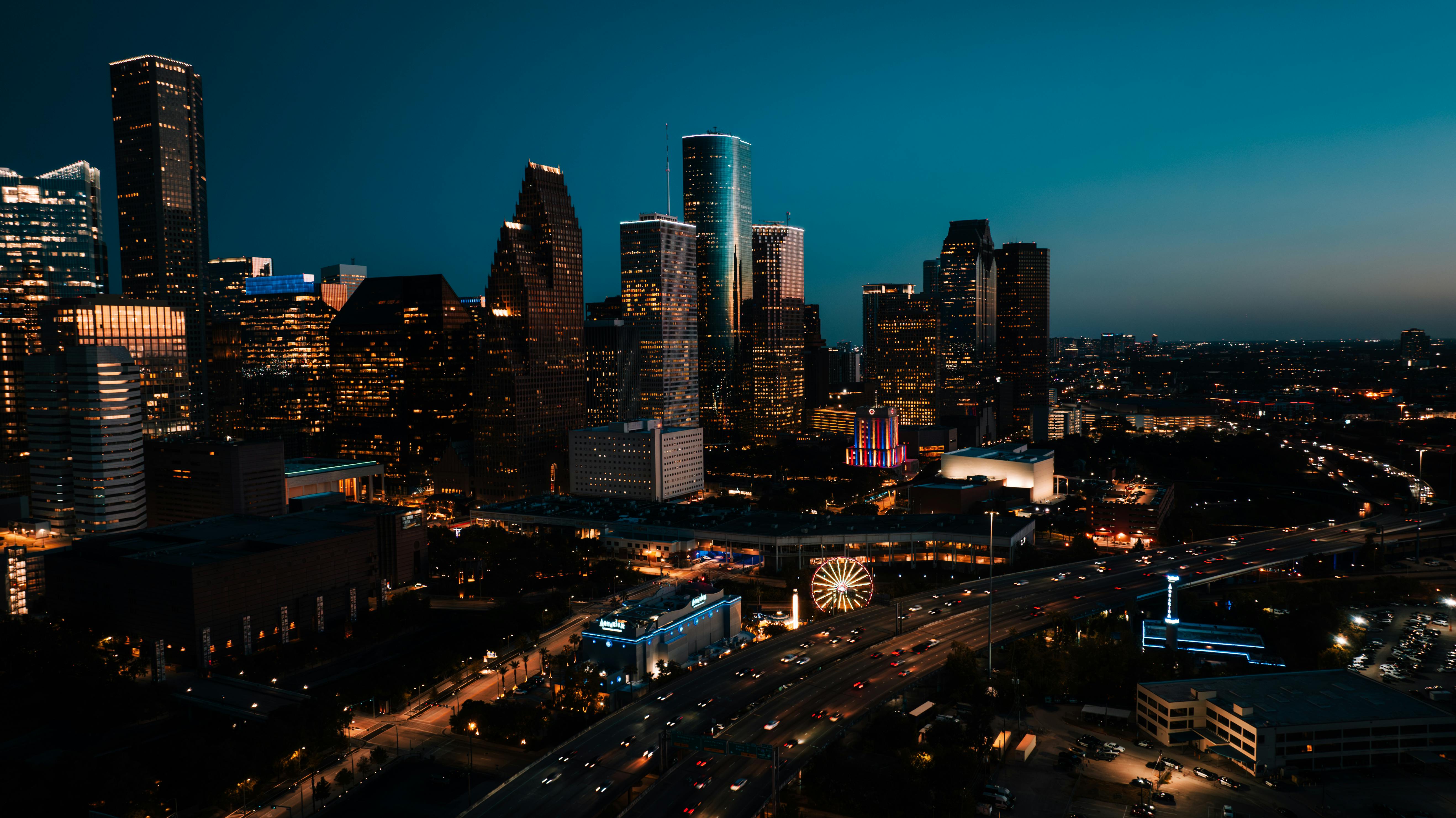
Houston is hard to define. As the fourth-largest city in the United States, it’s massive, diverse, and constantly evolving — a place where a strong job market and relatively affordable housing continue to attract newcomers from across the country.
But daily life here isn’t shaped by economics alone. In many ways, Houston functions less like a single, centralized city and more like a network of neighborhoods and suburbs connected by highways. Where you live, how far you commute, and whether you’re inside or outside the Loop can all have a significant impact on what everyday life looks like.
This mix of opportunity and scale is part of what makes Houston appealing, and also what can make it harder to navigate. If you’re considering a move to Houston — whether for work, a fresh opportunity, or a temporary stay — getting a feel for what daily life is really like can help you decide if it’s the right fit for you.
Quick Facts About Living in Houston
Understanding life in Houston starts with a few key details. While the city is home to roughly 2.4 million residents, it’s shaped as much by distance, climate, and infrastructure as it is by population size.
|
|
|
|
Location |
Southeastern Texas, about 50 miles inland with close access to coastal areas like Galveston. |
|
Population |
Roughly 2.4 million residents in the city and approaching 8 million across the greater Houston metropolitan area, making it one of the fastest-growing regions in the United States. |
|
Climate |
Hot, humid summers with temperatures regularly exceeding 90°F, paired with mild winters. Sudden thunderstorms and heavy rainfall are common, particularly during hurricane season. |
|
Transportation |
Highly car-dependent, with most residents relying on highways such as I-10, I-45, and US-59 (I-69) for daily travel. Public transportation exists but is more limited compared with other major U.S. cities. |
|
Neighborhoods |
Defined in part by the 610 Loop, which separates more urban, walkable neighborhoods inside the Loop from suburban communities with larger homes and longer commutes outside it. |
|
Major industries |
Energy, healthcare, aerospace, logistics, and engineering, supported by major employers like the Texas Medical Center and NASA’s Johnson Space Center. |
|
Shopping and retail |
One of the largest retail scenes in the country, anchored by destinations like The Galleria, along with outlet malls and neighborhood shopping districts. |
|
Food culture |
Widely recognized for its diversity, with strong representation of Tex-Mex, Vietnamese, barbecue, and a range of international cuisines that reflect the city’s global population. |
|
Parks and outdoor spaces |
Home to large urban green spaces like Memorial Park and Buffalo Bayou Park, along with an extensive network of trails and outdoor areas used for running, biking, and weekend gatherings. |
|
Sports teams |
Houston is home to several major professional teams, including the Astros (MLB), Texans (NFL), Rockets (NBA), Dynamo FC (MLS), and the Houston Dash (NWSL). |
Why People Move to Houston
To understand Houston’s appeal, it helps to start with its economy. The city is home to one of the largest metropolitan economies in the United States, with major industries spanning energy, healthcare, aerospace, logistics, and engineering. The Texas Medical Center — located just south of downtown — is the largest medical complex in the world and a major employment hub, with extended stay options nearby for temporary workers.
For many people, Houston offers the kinds of job opportunities that are harder to find elsewhere, particularly in specialized fields like engineering, medicine, and energy — many of which are centered in the city’s key business districts.
Cost of living is also a factor. Compared with major coastal cities like New York and Los Angeles, Houston remains relatively affordable, especially when it comes to housing. The absence of a state income tax is another attraction.
Houston Neighborhoods and Lifestyle
Of course, where you live plays a major role in shaping your experience of Houston.
Locals often describe their location in relation to the 610 Loop, a highway ring that surrounds central Houston. This distinction (whether you’re “inside the Loop” or “outside the Loop”) is one of the most important ways residents define the city.
Inside the Loop, neighborhoods tend to feel more urban, with easier access to restaurants, nightlife, and cultural attractions. Montrose is known for its arts scene and eclectic dining, while the Heights offers historic homes, boutique shopping, and walkable streets. Midtown attracts young professionals with its bars and nightlife, and the nearby Museum District boasts a host of cultural institutions alongside large green spaces like Hermann Park.
One thing that makes Houston feel different from many other cities is its lack of traditional zoning. Homes, shops, and restaurants may sit side by side, giving certain neighborhoods a more mixed and sometimes unpredictable look.
Outside the Loop, the lifestyle shifts toward larger homes and suburban communities. Areas like Katy, Sugar Land, and The Woodlands are popular with families seeking more space and quieter surroundings.
Daily Life in Houston
Beyond neighborhoods, daily routines in Houston are shaped by a few consistent themes: driving, dining, and local routines.
Most mornings begin with a commute, often along major highways like I-10, I-45, or US-59 (I-69). Even relatively short distances can involve traffic, which is why commute times are a key factor when choosing where to live — particularly for those working in major business areas along corridors like I-10, where nearby temporary housing can make day-to-day travel more manageable. For those with more flexibility, coworking spaces across Houston offer an alternative to traditional office commutes.
Food plays a central role in daily life. Lunch and dinner are opportunities to explore Houston’s diverse restaurant scene, whether that means grabbing Vietnamese pho, Tex-Mex, or barbecue. Many Houstonians consider dining out one of the best parts of living in the city.
Weekends often revolve around a mix of activities — trying new restaurants, visiting recreational spots like Memorial Park or Buffalo Bayou, exploring family-friendly activities across Houston, or spending time with friends. You might even take advantage of Houston’s proximity to the coast with trips to the beaches and waterfront restaurants of Galveston, about an hour away.
Shopping in Houston
Houston also stands out for its extensive retail scene, which ranges from massive shopping centers to local boutiques.
The Galleria is the city’s most well-known shopping destination. As the largest mall in Texas, it includes hundreds of stores, restaurants, and even an indoor ice-skating rink. For many residents, it functions as both a shopping hub and a place to spend an afternoon.
For a more upscale experience, the River Oaks District offers luxury shopping and dining in an outdoor setting. At a neighborhood level, areas like the Heights and Montrose provide a more local feel, with boutiques, vintage stores, and independent retailers.
Outlet Shopping in Houston
If you’re looking for discounts, Houston also has several major outlet shopping destinations.
Houston Premium Outlets, located northwest of the city, features more than a hundred stores offering reduced prices on major brands. Tanger Outlets Houston is another popular option, with a wide range of outlet retailers in an outdoor setting.
These locations are common weekend destinations for Houstonians looking to combine shopping with a day out.
Grocery Stores and Everyday Errands
Daily errands in Houston often revolve around grocery shopping, and many residents have strong preferences about where to shop.
One of the most popular grocery chains in Texas is H-E-B, which has developed a loyal following among Texans for its quality, selection, and prepared foods. Many locals recommend it as a go-to option for everyday shopping.
Other common grocery stores include Kroger, Whole Foods, and Trader Joe’s. Reflecting the city’s diversity, Houston also has a wide range of international grocery stores, making it easy to find ingredients from different cuisines.
How People Make Friends in Houston
As a city that attracts newcomers, Houston offers many ways to build a social network. In a place this big, many people actively seek out more structured ways to connect.
People may meet through social sports leagues, hobby groups, professional events, and volunteer organizations. Meetup groups and local festivals pertaining to a wide range of interests and hobbies also provide opportunities to connect.
Neighborhood restaurants, bars, and coffee shops frequently serve as informal gathering places, where people build connections over time.
Houston Nightlife
Houston’s nightlife is spread across several districts rather than concentrated in one central area.
Midtown is known for its bars and clubs, making it a popular destination for young professionals. Montrose offers a mix of cocktail bars, music venues, and LGBTQ nightlife, while the Heights has become known for breweries and more laid-back options.
Because the city is so large, nightlife experiences can vary significantly depending on where you live.
Pros and Cons of Living in Houston
Like any major city, Houston comes with both advantages and tradeoffs. Understanding these can help set realistic expectations if you’re considering a move.
Pros of Living in Houston
- Strong job market: Home to numerous Fortune 500 companies. Major employment hubs include Downtown, the Texas Medical Center, and the Energy Corridor. Opportunities across healthcare, energy, logistics, and engineering.
- Cultural diversity: One of the most diverse cities in the U.S. Multicultural communities shape neighborhoods, events, and daily life.
- Exceptional food scene: Widely considered one of the best in the country, with strong representation of Tex-Mex, Vietnamese, Korean, Indian, and more. Dining out is a major part of social life.
- Mild winters: Outdoor activities are possible most of the year. Rarely experiences freezing temperatures.
Cons of Living in Houston
- Heat and humidity: Summers are long, hot, and humid, often exceeding 90°F. Daily life often revolves around moving between air-conditioned spaces.
- Traffic and car dependence: Most residents rely on driving. Commutes can vary widely depending on location.
- Flooding and severe weather: Heavy rainfall and occasional hurricanes. Flood risk varies by neighborhood.
- Urban sprawl: Large metro area with significant distances between destinations. Limited walkability in many areas.
As with many large cities, safety can vary by neighborhood. Some areas are quieter and more residential, while others are busier and more densely populated. If you’re considering a move, researching specific neighborhoods can help you find a spot that fits your needs.
Benefits of an Extended Stay Hotel
If you’re planning a move to Houston but haven’t decided where to settle, an extended stay hotel can be a practical way to get to know the city before committing.
Unlike a traditional hotel, extended stay properties are designed for longer visits of weeks or even months, with features like in-room kitchens and amenities that support day-to-day living. Many also offer weekly rates and monthly rates, making it easier to manage costs over a longer stay.
This allows you to experience different parts of Houston and get a feel for daily life without committing to a lease. In a city as large and varied as Houston, where neighborhoods can offer very different experiences, that flexibility can be valuable.
Contemplating Life in Houston
Life in Houston is rich and diverse. If you’re thinking of a move to the Lone Star State, the city’s strong job market, international food scene, and eclectic neighborhoods make it an attractive proposition.
At the same time, factors like heat, traffic, and urban sprawl are part of the daily experience and important to keep in mind. For those excited to navigate its scale, Houston is a city that offers both fresh opportunities and a distinctive way of life.